

Case Study: Bemodo AI
1,922 people raised their hand. Only 292 got to book a call. That gap is not a leak. It’s the entire strategy.
Alright, this one’s gonna feel backwards. Stick with me.
Because if you showed most business owners this dashboard, they’d have a small heart attack.
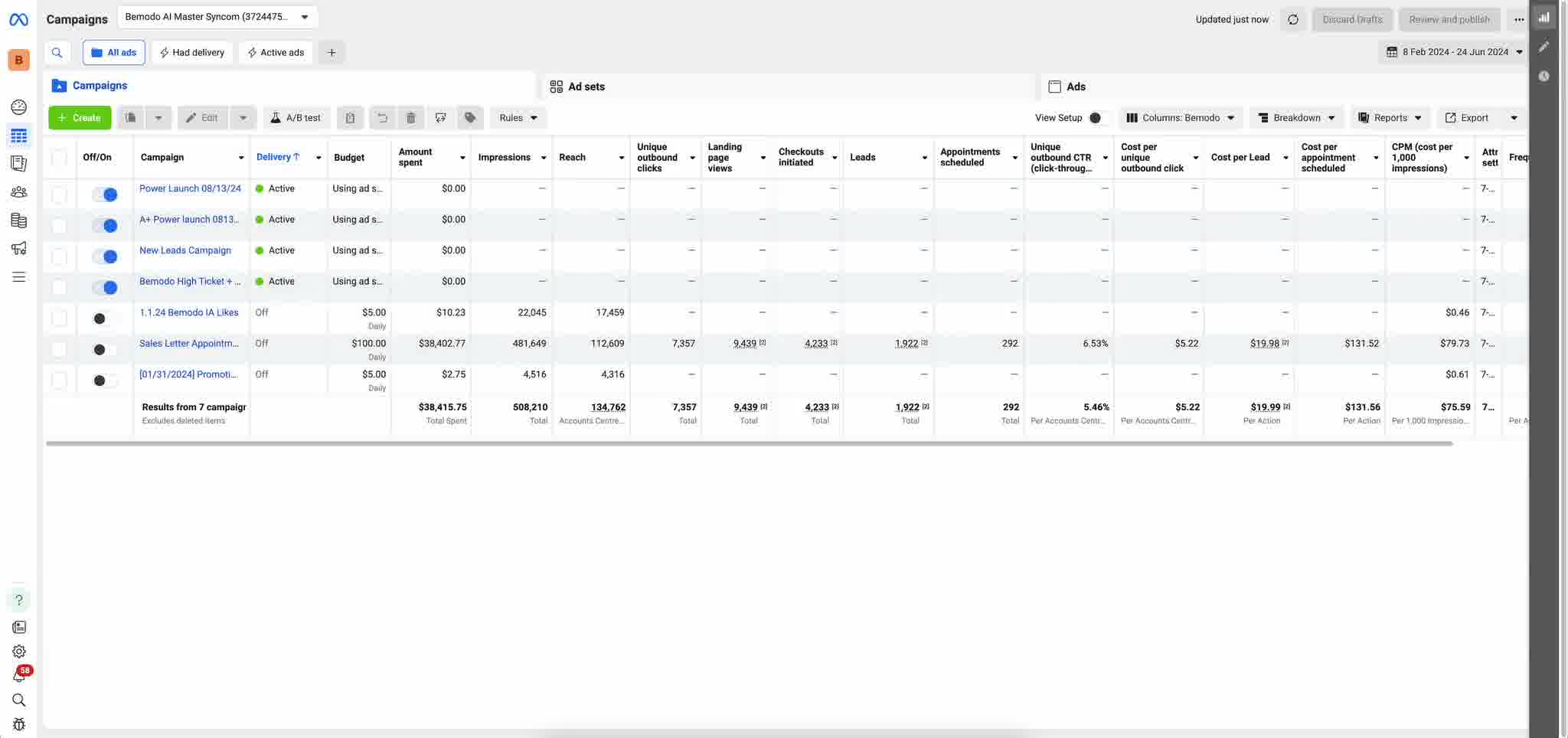
See it? 1,922 leads walked in. 292 made it to the calendar.
That’s roughly 85% of leads getting stopped at the door.
Any normal person looks at that and goes “bro, your funnel is broken, you’re bleeding leads everywhere.”
Nah. Those leads got thrown out. On purpose. By design. With a wall built specifically to stop them. 🧱
And it was the smartest part of the whole thing.
Why on earth would you do that
Here’s what Bemodo actually sells.
They’re an AI SaaS for content agencies. The software helps agencies pump out a wild amount of content fast. Cool product, real business.
But this campaign wasn’t selling the software.
It was selling their mastermind. Prompt engineering, high level AI copy generation, the whole deep-end curriculum.
Price tag: $12,000.
Now hold that number in your head while I tell you what the AI space looked like at the time.
Absolute zoo. 🦁
Everybody and their cousin was running AI ads. Every offer sounded identical. “10x your output with AI!” “AI is changing everything!” You couldn’t scroll ten seconds without tripping over one.
Which means anything with AI slapped on it was gonna get clicks. Tons of them. From anybody. From curious people, broke people, tire kickers, guys who just wanted to see what the fuss was about.
So yeah, you can absolutely get 1,900 opt ins in that market. Getting attention was never the hard part.
The hard part is that a $12,000 offer does not survive a calendar full of tire kickers.
Book 1,900 calls with people who can’t afford it and here’s what you actually get:
❌ A sales team that burns out in about nine days
❌ Hundreds of hours torched on “so is there a payment plan for like, $200?”
❌ Real buyers stuck behind three weeks of nonsense in the queue
Leads are easy. Qualified leads are the whole business.
So the funnel got booby-trapped
Three separate filters. Every one of them there to make it harder to reach the calendar, not easier.
Filter one: the page makes you work for it.
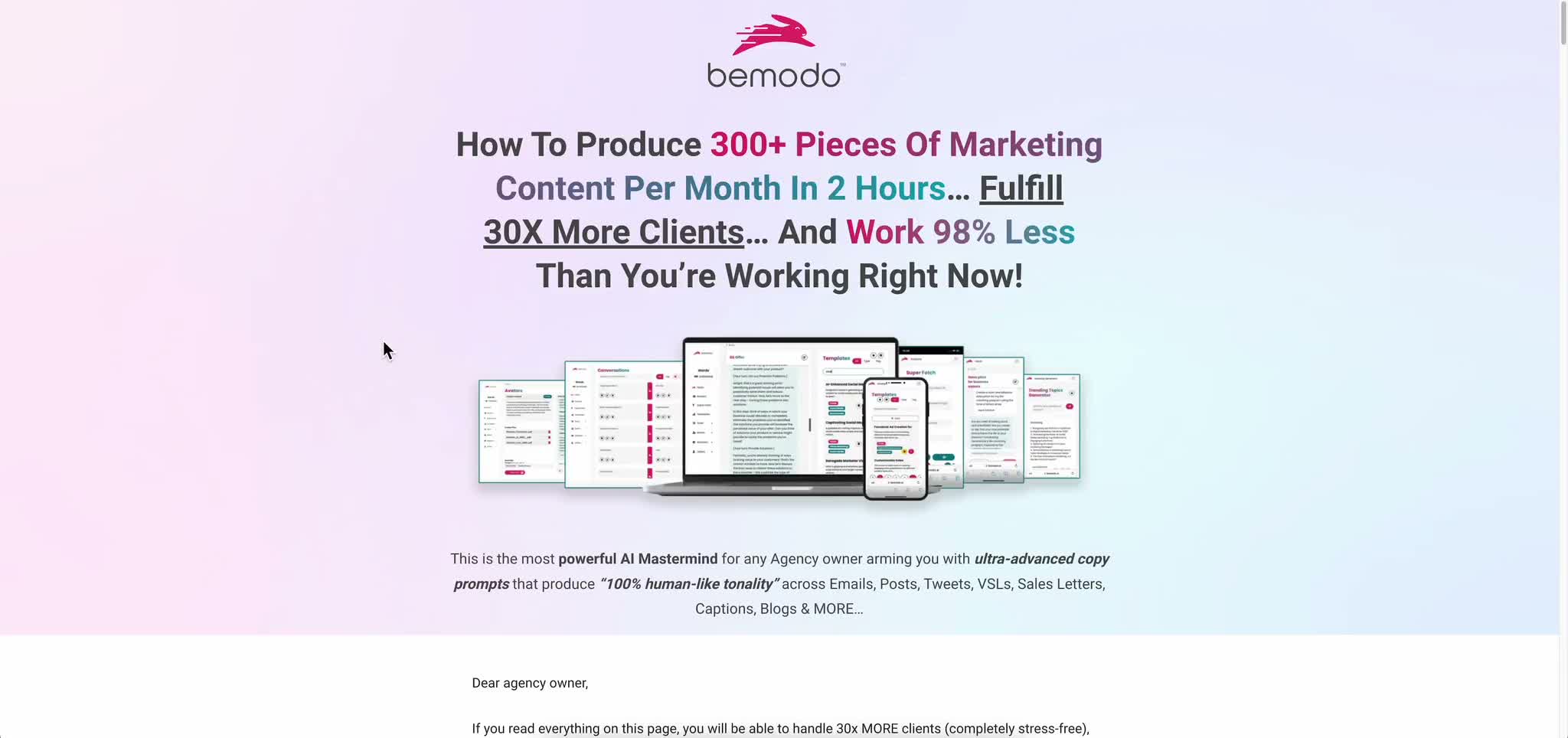
Top of the page: headline, product shot, one paragraph. And then?
Nothing. No button. Keep scrolling, buddy.
The first call to action doesn’t show up until you’ve chewed through a serious chunk of sales letter.
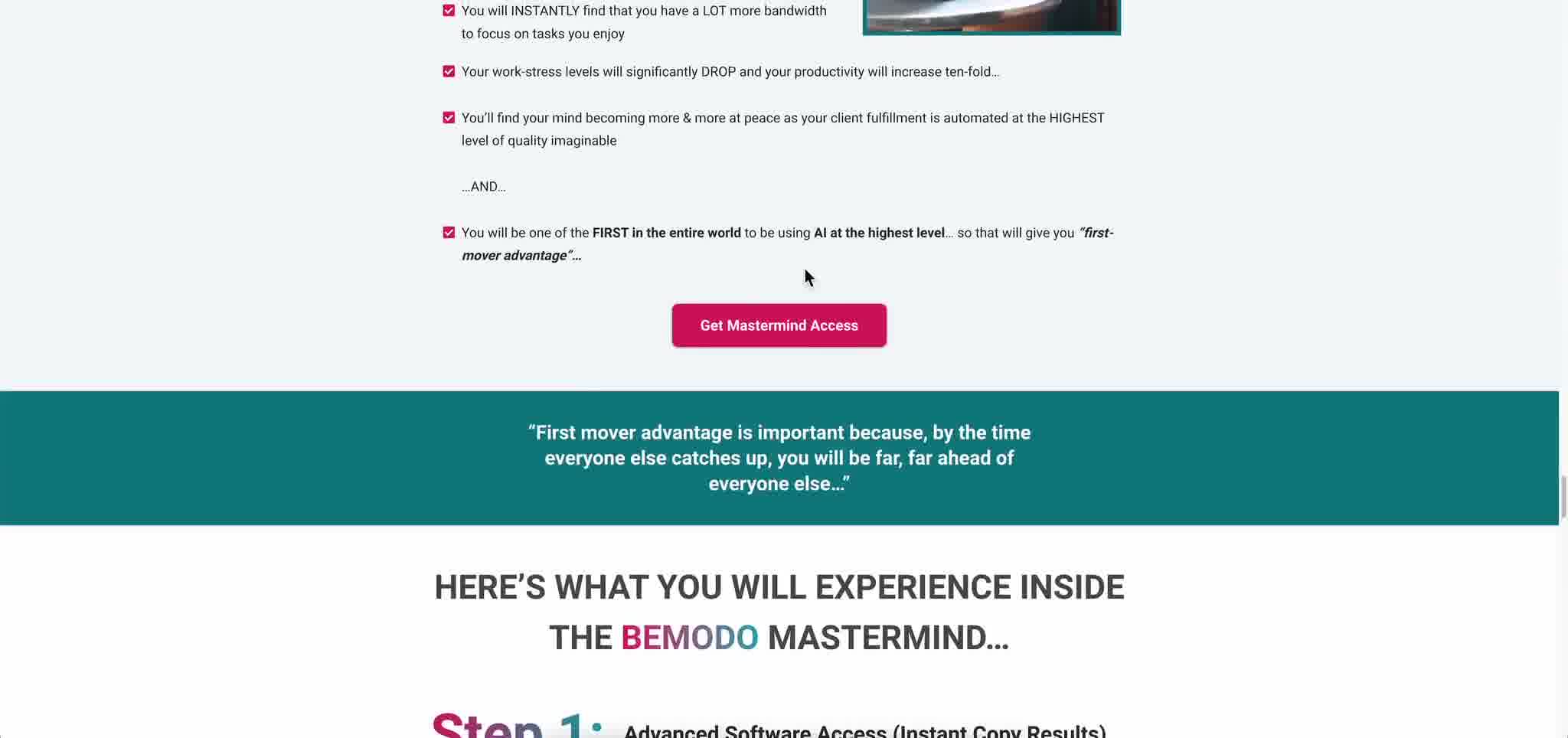
That’s the first “Get Mastermind Access” button. Way, way down there.
Sounds like a mistake, right? Every CRO blog on the internet screams PUT THE BUTTON UP TOP.
But think about who actually reads that far.
Somebody who’s mildly curious taps out at paragraph two. They’re gone. Great, bye.
Somebody with a real agency and a real content bottleneck? They read the whole thing. Because it’s their actual problem on the screen.
The page filters by attention span. And attention is a pretty solid proxy for “this person has a problem worth $12,000 to them.”
Filter two: the hard qualifier.
This is the big one. This is where the 1,630 went.
After somebody opts in, they don’t get the calendar. They get questions. Real ones, designed to figure out if they’re actually in the market for a twelve thousand dollar program.
Pass, and you can book. Don’t pass, and you don’t.
Brutal? A little. Necessary? Completely.
Because the alternative is a sales team spending six weeks discovering the same thing one Zoom call at a time. 🫠
Filter three: the audience was capped on purpose
Usually you want a big audience. More room to scale, less fatigue, Meta’s algorithm gets more to chew on.
Not here. Here the audience got squeezed down to 2.4 to 2.8 million people and deliberately kept there.
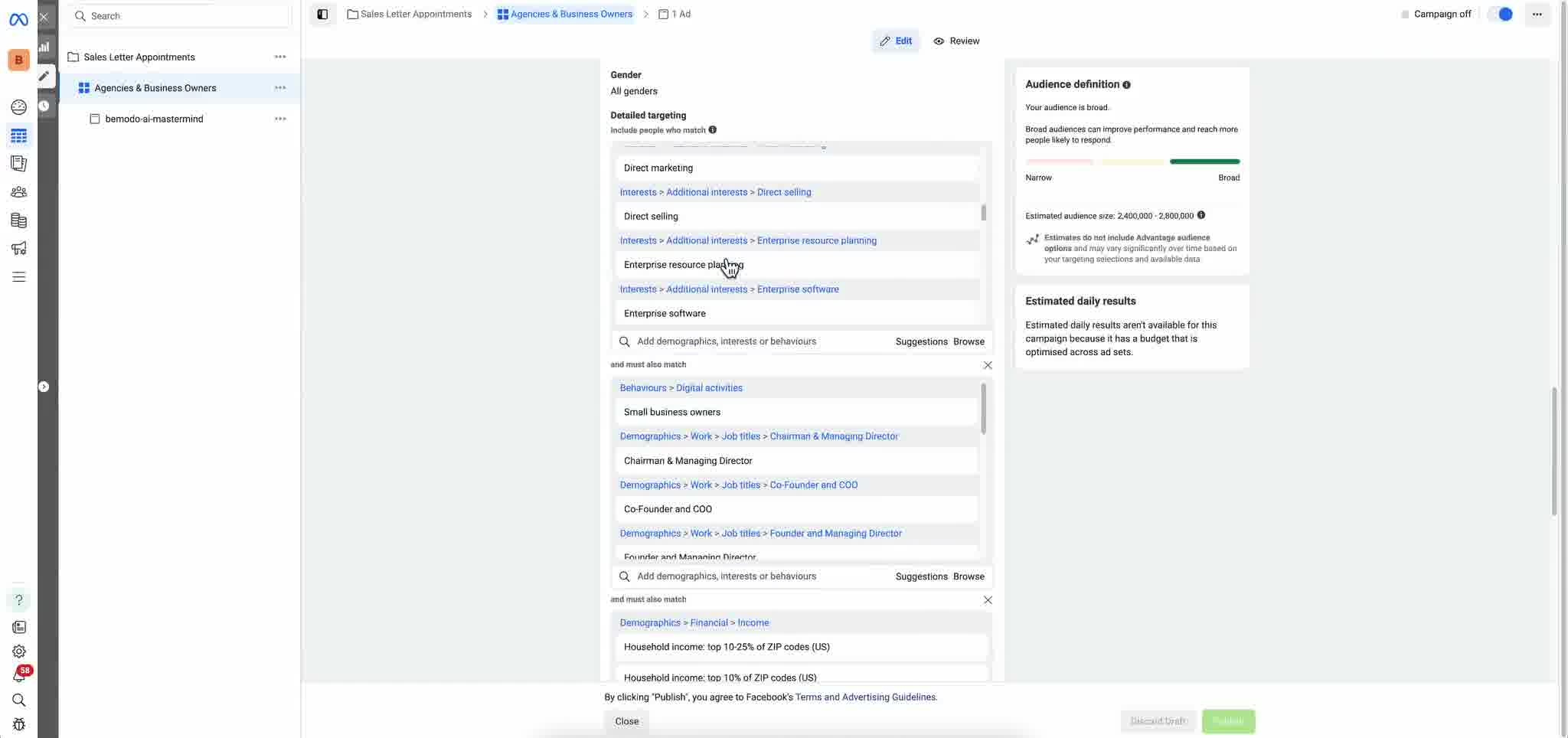
Look at that stack. Three layers, and each one has to be true at the same time.
Layer 1. People into the stuff agency owners live in. Marketing, advertising agencies, ad tools, scheduling software, enterprise software. Basically: does this person’s browser history look like an agency owner’s?
Layer 2. AND they have to be a business owner. Small business owner behavior, plus job titles. Founder. Co-Founder and COO. Chairman and Managing Director. Actual decision makers, not somebody’s intern.
Layer 3. AND they live in a top income ZIP code. Top 10%. Top 10 to 25%.
That last one gets a lot of side-eye but the logic is dead simple. It’s a $12,000 offer. You are looking for people who can write that check without their stomach dropping.
Age got squeezed too. 25 to 55, nothing outside it. Because left alone, AI-flavored copy will happily go show itself to every 19 year old on the internet who thinks ChatGPT is neat.
Stack all three and you get a small, tight, expensive audience. Which is exactly what you want when the thing costs twelve grand.
The part that still gets me
All of that. $38,402 in spend. Nearly half a million impressions. Four and a half months of running.
Off of one campaign. One ad set. One ad.
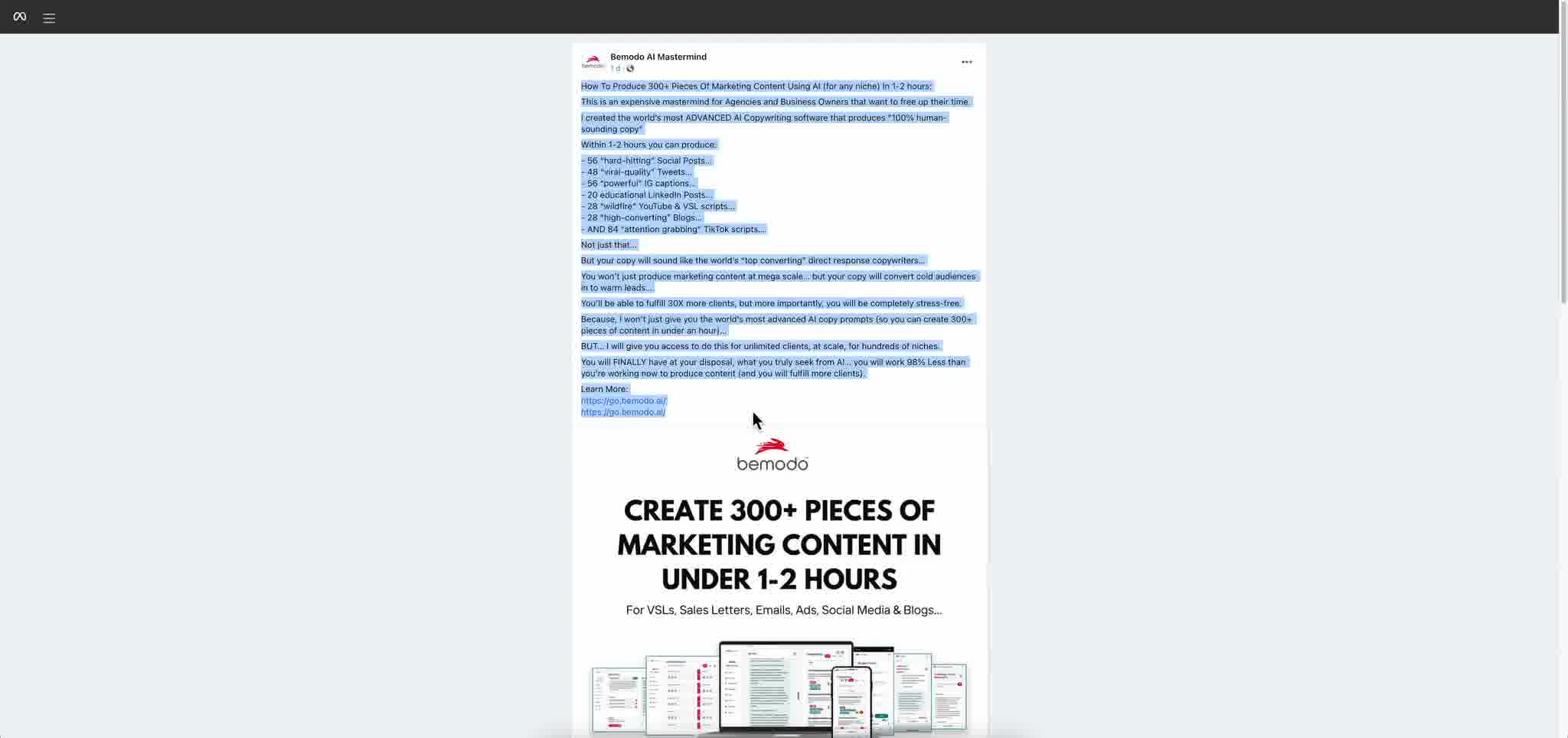
That’s it. That’s the ad. One piece of copy that got scaled up to $400 and $500 a day and just kept going.
Most accounts need a rotating cast of fifteen creatives to hold that kind of spend. This one rode a single ad for months.
Not because of some targeting hack. Because the copy actually said something different in a market where every single competitor was saying the exact same three sentences.
Every ad fatigues eventually, this one included. But copy that’s genuinely differentiated buys you a lot more runway before that happens.
Let’s do the actual math
$131.52 per booked call feels expensive if you’re used to seeing twenty dollar leads.
So put it next to the price tag.
The offer is $12,000. At $131.52 a call, one single sale covers about 91 booked calls.
Ninety one. From one customer.
That’s the thing about cost per lead. On its own it means absolutely nothing. A $19 lead on a $200 product is rough. A $131 call for a $12,000 program is a bargain, assuming the person showing up is real.
And that’s what all the filtering bought. Not cheaper leads. Realer ones.
What to steal from this
If you sell something expensive, quit optimizing for lead count. Seriously. That number is a vanity metric and it’s lying to you.
Put friction in on purpose. Make people read. Make them answer questions. Make them prove they’re serious before they eat an hour of your team’s day.
You’ll watch your lead count drop and it’ll feel bad for about a week.
Then you’ll notice your sales team stopped complaining, your show up rate climbed, and your close rate went somewhere it’s never been.
Fewer, better, richer. Every time.
Selling something high ticket?
This is what I build. Long sales pages and ad copy that pull in the right people and quietly send everybody else home.
So your calendar fills up with buyers instead of browsers.
If you’ve got a real offer and no page doing it justice… let’s talk.