How We Took a Struggling Wellness Blog from $0 to $550k in 18 Months
This project showcases the effectiveness of a multi-channel digital marketing approach, which can result in significant growth and improvement in online visibility and revenue.
ClientJane Summerfield
Date11 July 2020
ServicesSEO, Email Marketing, Social Marketing, PPC
Wellness Warrior was a passion project turned business—a health and nutrition blog with 47,000 email subscribers but virtually zero revenue. The founder had great content and a loyal audience, but no monetization strategy and a website buried on page 4 of Google for her main topics.
What We Did:
Most SEO agencies would’ve started with link building. We started with surgery.
Their site had 600+ blog posts with zero search intent optimization.
We:
Consolidated 600 posts into 120 comprehensive guides targeting commercial keywords (“best protein powder for women over 40” vs. “what is protein”)
Rewrote product reviews to actually convert—added comparison tables, video demos, and affiliate links that didn’t feel sleazy
Fixed a site speed disaster (7.2s load time → 1.8s) that was killing mobile conversions
Then we got aggressive with content distribution:
Launched a Pinterest strategy that drove 340K monthly visitors within 6 months
Partnered with 12 micro-influencers in the wellness space for backlinks and traffic
Created a weekly email sequence that converted subscribers into buyers (2.3% → 8.7% click-to-purchase rate)
The Results:
Revenue: $0 → $550M over 18 months (primarily affiliate commissions and sponsored content)
Email conversion: Tripled click-through rates and grew list to 94,000 subscribers
The Real Win:
Six months in, the founder quit her corporate job. By month 18, she’d hired a team of three. The business now runs semi-passively while she focuses on creating content she actually cares about.
Healthy Living Blog: Facebook Ad Copywriting Case Study
This project showcased my ability to execute a successful Facebook Ads campaign, utilizing my skills in data analysis, copywriting, and conversion rate optimization. I was able to drive significant results for the client, and the campaign remains one of the most successful digital marketing campaigns I have undertaken to date.
The client had a natural healing product targeting people tired of chronic pain, expensive medical bills and the side effects that come with mainstream medication. The audience was skeptical by nature.
These are people who have tried things before and been let down. The copy had to earn their trust before asking for anything.
The Copy Approach
This called for long form direct response copy. Not a quick punchy ad. A story.
The copy opened by going straight at the pain.
Chronic conditions, mounting medical bills, the fear of needles, the frustration of treatments that never fix the root cause. It spoke to someone who had watched people they love suffer and felt powerless about it.
From there it introduced the solution as something the audience had probably never considered.
Not another pill. Not another appointment. A simple 3 minute routine built on ancient healing principles with no needles, no side effects and no practitioner needed.
The middle section built credibility through specificity. Over 150 conditions covered. Precise pressure points. The kind of detail that makes a skeptical reader think this person actually knows what they’re talking about.
The close painted the picture of what life looks like on the other side. Waking up without pain. A doctor surprised by your numbers. Your family healthier without spending thousands on treatments.
Then a soft but clear CTA directing people to a private presentation.
Results
Reach: 21,384 people
Unique link clicks: 648
CTR: 2.59%, nearly three times the industry average of 0.9%
Cost per click: $0.57
Landing page views: 621
Checkouts initiated: 44
Total ad spend: $388.06
Total sales generated: $50,000 in 4 months
Return on ad spend: over 128x
What made it work
The copy respected the reader’s intelligence. It didn’t shout benefits at them or make claims that felt too good to be true. It told a story they recognised, walked them through a solution that made sense and let them arrive at the decision themselves.
A 2.59% CTR on a cold audience in a skeptical health niche is not an accident. Neither is $50k from $388 in spend. That’s what happens when the copy is doing its actual job.
Xquizit Domains: Facebook Ad Copywriting Case Study
Xquizit Domains needed to get in front of SEOs and digital entrepreneurs who buy aged and premium domains. The goal was simple. Write ad copy that spoke directly to that audience, made the product feel like a no brainer and drove people to sign up for a free trial. All on a shoestring budget.
The Copy Approach
The audience buys domains for SEO advantage. They know what a good domain is worth, and they hate wasting time hunting for one. So the copy leaned straight into that frustration.
No fluff, no vague claims. Just a direct conversation with someone who’s been burned by bad domains and slow bidding processes before. The ad walked through four specific pain points: wasted time searching, buying domains blind, missing out on auctions and losing bidding wars, and positioned Xquizit as the solution to each one.
The CTA pushed a 30 day free trial with a soft deadline to create just enough urgency without feeling forced.
Results
3,119 impressions
41 unique link clicks
1.59% CTR
$2.21 cost per click
4 qualified leads generated
Total spend: $104
What the numbers say
A 1.59% CTR on a cold audience with no brand recognition is a copy win. The ad was shown to people who had never heard of Xquizit Domains and over 1 in every 100 people who saw it clicked. For context, the average Facebook ad CTR sits around 0.9%. This one ran at nearly double that on a $104 budget.
The copy did its job. It found the right nerve, said the right thing and got people moving.
Simple Campaign Management for Blue Whale Media Using GoHighLevel
Better Engagement: The AI ChatBot and landing pages led to more user interaction on the website.
Efficient Appointment Setting: Automated workflows made setting and confirming appointments easier, with fewer no-shows.
Effective Lead Nurturing: The email series helped move leads from initial interest to conversion.
Increased Conversions: The campaign helped Blue Whale Media attract more clients and increase overall conversions.
Conclusion
The simple campaign management for Blue Whale Media showed how GoHighLevel can integrate different marketing strategies into one smooth system. Using AI ChatBots, landing pages, and automated workflows, the campaign effectively engaged potential customers, streamlined operations, and nurtured leads, setting a solid foundation for future growth.
This case study highlights how you use GoHighLevel to deliver effective marketing solutions, showing its value in achieving real results for your agency.
Case Study: AI ChatBot Deployment Across Multiple Websites
Client:Various
Services:AI Chatbot, GMB and FB Chat
ObjectiveImprove customer engagement and support on multiple websites using AI ChatBots.
Enhanced User Experience: The ChatBot answered common dental care questions, making the site more user-friendly.
Higher Conversion Rates: More users converted to booked appointments thanks to easy access to information.
Hyfig:
Streamlined Customer Support: The ChatBot handled frequent inquiries, freeing up staff to focus on more complex issues.
Increased Interaction: Users engaged more with the site due to the interactive ChatBot features.
Insights and Learnings:
Targeted Responses: Customizing the ChatBot to address specific site needs was crucial for success.
Continuous Improvement: Regular monitoring and updates based on user feedback enhanced ChatBot effectiveness.
User-Friendly Design: Ensuring the ChatBot was easy to use and visually integrated with each site helped maintain a consistent user experience.
Conclusion:
Deploying AI ChatBots across multiple websites significantly improved customer engagement and support.
Each ChatBot was tailored to meet the specific needs of its site, providing instant, 24/7 assistance that enhanced user satisfaction and streamlined operations. This case study demonstrates the effectiveness of AI ChatBots in improving website functionality and customer experience.
Effective Outreach Email Campaign for Lead Generation
In this case study, we’ll explore an outreach email campaign designed to generate leads for a deck building company. The goal was to connect with potential customers and refer them to our client who was temporarily unavailable.
Campaign Overview
We targeted 254 leads in two separate email sequences. Our primary objective was to gauge the effectiveness of our email content and its ability to generate responses and potential business opportunities.
Email Sequence Details
Sequence 1
Leads Targeted: 254
Emails Sent: 115
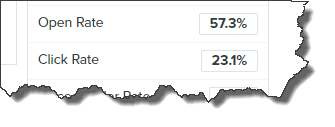
Open Rate: 48.7% (56 emails opened)
Click Rate: 0% (0 clicked, no links included)
Reply Rate: 9.57% (11 replies)
Appointments Booked: 9
Sequence 2
Leads Targeted: 216
Emails Sent: 173
Open Rate: 41.62% (72 emails opened)
Click Rate: 0% (0 clicked, no links included)
Reply Rate: 3.47% (6 replies)
Appointments Booked: 11
Email Content
The email content used in our campaign was designed to be straightforward and personal. Here’s an example of the email sent:
Subject: Looking for a Deck Building Company to Send Phone Calls
Hi there,
Would you be the right person to talk to about referring some customers your way?
I recently built a website for one of my deck building clients but he’s kind of out of town, and it’s generating steady leads for services.
I just don’t wanna lose these leads. I know how valuable they are and I’ve got about 3 right now in and around Milwaukee. I just need to give them off to somebody for a while until I figure out what to do with the site.
So if you’re taking in more work, please let me know and I would be happy to provide you with more information and answer any questions you may have.
Analysis
Open Rate:
Sequence 1 had a slightly higher open rate (48.7%) compared to Sequence 2 (41.62%). This indicates the subject line and sender information were engaging enough for recipients to open the emails.
Click Rate:
Both sequences had a 0% click rate, which is expected since no links were included in the emails. Future campaigns might benefit from including relevant links or CTAs.
Reply Rate:
Sequence 1 had a higher reply rate (9.57%) compared to Sequence 2 (3.47%). This indicates that the email content in Sequence 1 was more engaging or relevant to the recipients.
Appointments Booked:
Sequence 1 resulted in 9 appointments booked, while Sequence 2 led to 11 bookings. This shows that the campaign successfully converted email engagements into tangible business opportunities.
Conclusion
The outreach email campaign showed potential with reasonable open and reply rates and successfully converted engagements into appointments. By refining the email content, enhancing the CTA, and implementing a follow-up strategy, we can expect even better results in future campaigns.
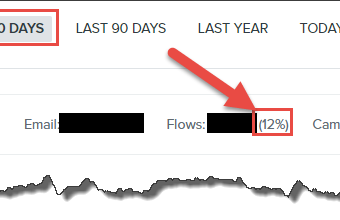
A gluten-free snack brand migrated platforms and saw a 12% revenue increase in 30 days — with a 55% open rate on the lead nurture flow and 43% on abandoned cart.
Key Results
+12%Revenue Lift in 30 Days
43%Abandoned Cart Open Rate
14%Abandoned Cart CTR
55%Lead Nurture Open Rate
21%Lead Nurture CTR
Background
PureBite Co. produces gluten-free snack bars, co-founded by two brothers. When Elliott reached out, they were running MailChimp — fine for basic sends, but not built for the revenue-driven automation a growing brand actually needs. The brief covered the full scope: strategy, migration planning, project management, and hands-on implementation.
One thing that made this project stand out: the consultant found PureBite on a grocery store shelf before the engagement even started, bought it, and tried it. Loved it. When the product genuinely delivers, email marketing becomes a lot easier to write.
Product & Klaviyo Flow Setup
PureBite Co. snack bars — spotted on a grocery shelf before the project started
Klaviyo flow setup post-migration from MailChimp
Klaviyo Flow Performance
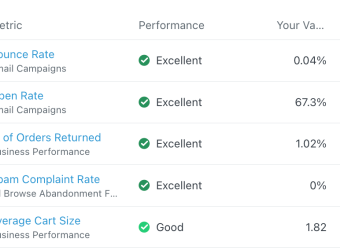
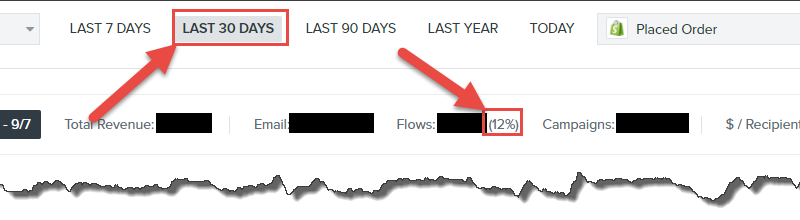
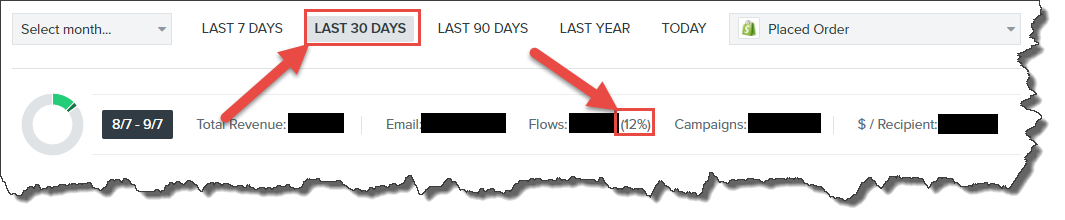
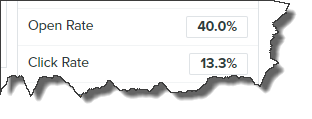
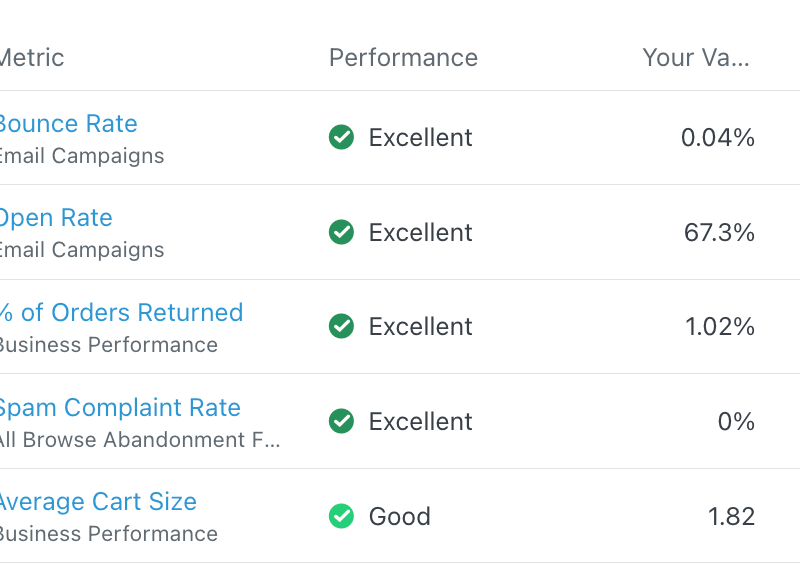
These are the actual Klaviyo stats from the flows after migration. The abandoned cart numbers alone show exactly how much PureBite was leaving on the table with MailChimp — a 43% open rate and 14% CTR is well above industry average for any ecommerce flow.
Overall flow performance — open rates, CTR, and revenue attribution
Abandoned Cart vs Lead Nurture – Stats Comparison
Abandoned Cart Flow — 43% open rate · 14% CTR
Lead Nurture Flow — 55% open rate · 21% CTR
Metric
Result
Abandoned Cart — Open Rate
43%
Abandoned Cart — Click-Through Rate
14%
Lead Nurture — Open Rate
55%
Lead Nurture — Click-Through Rate
21%
Revenue Increase (first 30 days)
+12%
What Made It Work
The Right Platform — Klaviyo gave the segmentation, automation, and analytics muscle that MailChimp simply doesn’t have at this level for ecommerce. The migration itself unlocked capabilities that weren’t possible before.
A Methodical Plan — Every step was mapped before execution started. No guesswork, no pivoting mid-project — a structured approach run through to completion.
Two-Way Accountability — The consultant didn’t just build the strategy and hand it over. He held the client accountable to following it too. That shared ownership is what gets results across the finish line.
The Takeaway: Revenue was up 12% within the first 30 days. For a CPG brand selling through grocery and online, that kind of email-driven lift in a single month shows exactly what switching to the right platform — and running it properly — can do.
Results Summary
Metric
Result
Revenue Increase (first 30 days)
+12%
Abandoned Cart Open Rate
43%
Abandoned Cart CTR
14%
Lead Nurture Open Rate
55%
Lead Nurture CTR
21%
Migration
MailChimp → Klaviyo
Services Delivered
Strategy, project management, full implementation
Client Testimonial
“Very methodical and good at what he does. He lays out a plan and sticks to it — but most importantly he makes you stick to the plan as well. His dedication and commitment to client satisfaction really stood out throughout the whole project.”
Elliott R. — Co-Founder, PureBite Co. ★★★★★
$700,000+ Revenue in One Year with Klaviyo Email Marketing
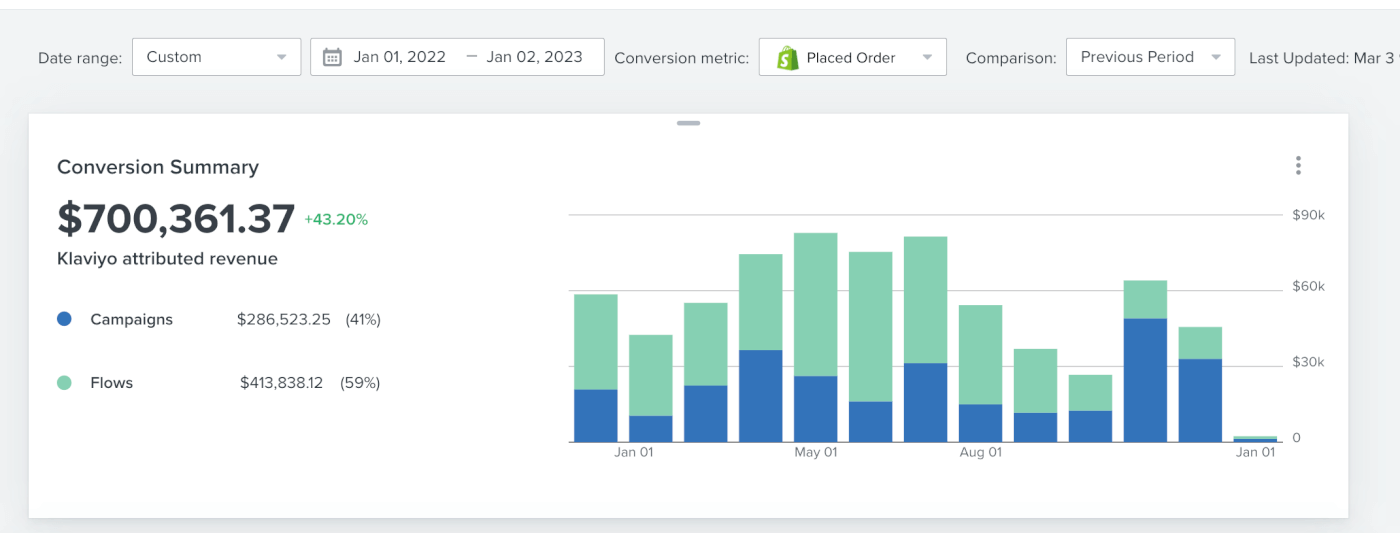
Twelve months. Ten automations built in the first three months. $700,361 in attributable email revenue – 59% from flows, 41% from campaigns.
Key Results
$700,361Total Revenue (1 Year)
$413,838From Flows — 59%
$286,523From Campaigns — 41%
10Automations (First 3 Months)
Klaviyo Dashboard — Annual Revenue Overview
The screenshot below is the full-year Klaviyo summary for this client. Flows doing the heavy lifting at 59%, campaigns supporting consistently throughout the year.
Flow revenue attribution — $413,838 across automated sequences
Campaign revenue — $286,523 from 12 months of consistent sends
Flow Architecture
Ten automations were live within the first three months, covering every stage of the customer lifecycle from welcome through to win-back. Once built, they ran 24/7 without any manual effort.
10 automated sequences — all built in the first 3 months
Reporting & Analytics Dashboard
Every decision was backed by data from Klaviyo, Google Analytics, Shopify, and custom dashboards. Weekly and monthly reports kept the client aligned at every stage.
Reporting dashboard used for regular client performance updates
Full Strategy Breakdown
Opt-ins & List Building — Lead magnets, landing pages, and on-site capture forms to grow a clean, engaged list before anything else went live.
Segmentation — List split by behaviour, purchase history, and interests so every send reached the right person at the right time.
Email Design — Mobile-first templates, brand-consistent, built to drive clicks — not just opens.
Content Creation — Storytelling, education, promotions, and time-limited offers — a full content mix that keeps subscribers engaged month after month.
10 Automations — All configured within the first 3 months and running 24/7 across the entire customer lifecycle from day one.
A/B Testing & Analytics — Continuous subject line, copy, and CTA testing — tracked via Klaviyo, Google Analytics, Shopify, and custom dashboards.
The Takeaway: Flows generated 59% of revenue without a single manual send. That’s what building the automation infrastructure right from the start actually looks like. Campaigns added the other 41%, keeping the brand front of mind all year without the list going cold.
Results Summary
Metric
Result
Total Klaviyo Revenue (12 months)
$700,361
Revenue from Automated Flows
$413,838 (59%)
Revenue from Campaigns
$286,523 (41%)
Automations Built
10 (within first 3 months)
Reporting Cadence
Weekly & Monthly
Platforms Tracked
Klaviyo, Shopify, Google Analytics
$34,000+ Revenue in 30 Days with Klaviyo Email Marketing
One month. One focused execution. Klaviyo’s share of total revenue nearly doubled — from 12% in December to 23% within 30 days.
Key Metrics
$34,000+Total Klaviyo Revenue (30 Days)
$21,000+From Flows
$12,000+From Campaigns
12% → 23%Klaviyo Revenue Share
Background
The client was an ecommerce brand focused on customer retention.
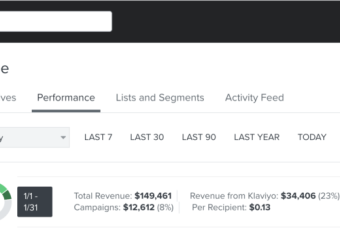
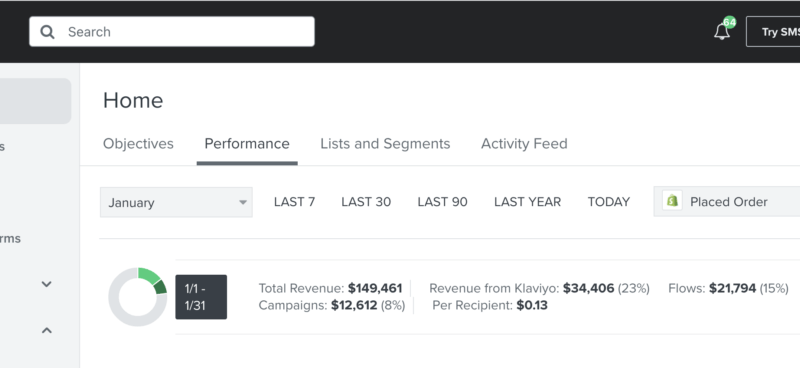
When I stepped in, Klaviyo was contributing around 12% of total store revenue. One month after the new strategy launched, that number climbed to 23% — nearly doubling email’s contribution to the business. The $34,000+ total in that single month tells the rest of the story.
Klaviyo Dashboard – 30-Day Results
The screenshot below is from the client’s actual Klaviyo account at the close of the 30-day period. Flows and campaigns running together, each pulling their weight.
Klaviyo dashboard — $34k+ revenue, 23% of total store revenue across 30 days
The 6-Step Process
Full Klaviyo Account Audit — Every flow, campaign, segment, and benchmark already in place was reviewed. You can’t improve what you haven’t measured properly.
Gap & Opportunity Mapping — The audit flagged room for more split testing inside existing flows and uncovered 5 new flows that hadn’t been built yet — all leaving revenue behind.
Revised Campaign Calendar — Shifted to 2–3 sends per week with a full month planned in advance. A/B testing on subject lines was built in from day one.
Segmentation Overhaul — A new Hyper-engaged segment was created — high-intent subscribers who tolerate higher send frequency without bouncing off the list.
Strategy Deployment — Executed using a proven ClickUp marketing template already refined across multiple ecommerce clients.
Execution — Right designs, right messaging, right segmentation, right split tests — all firing together. Execution is where results actually happen.
A/B Testing – Subject Line Open Rates
Subject line testing was live across every campaign. The screenshot below captures open rate performance across the A/B splits — this is the data that shapes what you write next month.
Subject line A/B test results — open rate comparison across campaign variations
Key Insight: It’s all about execution — getting the right designs, messaging, segmentation, and split tests firing together. The strategy matters, but what you actually do with it matters more.
Results Summary
Metric
Result
Total Klaviyo Revenue (30 days)
$34,000+
Revenue from Automated Flows
$21,000+
Revenue from Campaigns
$12,000+
Klaviyo Revenue Share — December Baseline
12%
Klaviyo Revenue Share — After 30 Days
23%
New Flows Created
5
Campaign Send Frequency
2–3 per week
How StridePets Gained an Extra 31% in Revenue Through Flows & Email Campaigns
In 2 months, the brand re-engaged potential customers and started selling big – built from zero email infrastructure on Klaviyo and Shopify.
Key Results
6.5%Desktop Sign-up Rate
5.9%Mobile Sign-up Rate
$14,500Welcome Flow / Month
$2,400Abandoned Checkout / Month
$1,100Browse Abandonment / Month
$667Abandoned Cart (First 4 Days)
~$600Avg Revenue per Campaign
+31%Overall Revenue Increase
The Challenge
StridePets came in with almost no email marketing in place. No flows. No segmentation. No strategy — just a Shopify store sitting on untapped subscriber data. Three core things needed fixing before anything else could happen:
No foundational flows – zero automated engagement with subscribers
No audience segmentation – everyone was getting the same message
No data-driven campaigns – sends were ad hoc with no performance tracking
The Strategy
Klaviyo was integrated with Shopify and an entire email system was built from scratch. Pop-up forms to capture emails, segmented lists for targeted messaging, and seven automated flows covering every stage of the customer lifecycle. Once the flows were producing results, six monthly campaigns were added on top to keep revenue consistent.
The list-building engine. A well-designed pop-up hitting 6.5% on desktop and 5.9% on mobile — solid numbers before a single email goes out.
Pop-up opt-in form — 6.5% desktop, 5.9% mobile sign-up rate
Welcome Flow — $14,500 / Month
Three emails over four days. Every new subscriber gets a sequence that introduces the brand, addresses common objections, and gives people a reason to buy. At $7.90 revenue per recipient, this single flow pays for itself over and over.
Welcome Flow structure — 3 emails across 4 days
Welcome email design used in the flow
Metric
Result
Revenue
$14,500 / month
Revenue per Recipient
$7.90
Number of Emails
3 emails over 4 days
Audience
New subscribers
Abandoned Checkout Flow – $2,400 / Month
These are the hottest prospects — shoppers who got all the way to checkout and left. Three emails over four days, each nudging them back with increasing urgency. $7.03 per recipient. This flow alone could justify the entire email setup.
Abandoned Checkout Flow — 3 emails, 4-day window
Abandoned Checkout email design
Metric
Result
Revenue
$2,400 / month
Revenue per Recipient
$7.03
Number of Emails
3 emails over 4 days
Browse Abandonment Flow — $1,100 / Month
Two emails triggered when someone browses products but adds nothing to cart. First fires at 2 hours, second at 2 days. Lower-intent audience, but $1.21 per recipient adds up to $1,100 every month running on full autopilot.
Metric
Result
Revenue
$1,100 / month
Revenue per Recipient
$1.21
Email 1 Timing
2 hours post-browse
Email 2 Timing
2 days post-browse
Abandoned Cart Flow — $667 in First 4 Days
Cart abandoners who didn’t reach checkout. The flow launched and pulled in $667.90 in its first four days — $6.24 per recipient. A strong early signal for a flow that only improves with time and testing.
Metric
Result
Revenue (first 4 days)
$667.90
Revenue per Recipient
$6.24
Campaign Performance
Six campaigns per month running alongside the flows — a mix of proven formats and fresh experiments. Each campaign averaged ~$600 in revenue, not counting promotional or sale-day spikes.
Client Testimonial
“The team delivered weekly reports showing exactly what was invested and what came back from it. Transparency from day one, results to match.”
Jason P. — COO, StridePets ★★★★★
How Strategic Copy, Image Editing & Store Architecture Tripled Monthly Sales on Payhip
The Original Recipe Vault — vault.theoriginalrecipe.com
Platform
Payhip (custom storefront)
Deliverables
Store build, product copywriting, image editing
Tools Used
Payhip, Canva, Adobe Photoshop
Audience
Busy moms and health-conscious families
Result
Sales grew from 11 to ~30 per month — 173% increase
Project Overview
The Original Recipe Vault is a digital product store on Payhip built at vault.theoriginalrecipe.com. It’s a membership-based library of 28 digital products covering food, nutrition, health planning, and wellness — built specifically for busy moms and health-conscious families who don’t have time to piece things together from 15 different sources.
This wasn’t a template drop and a quick launch. Every page on the store was built from scratch. Every product title, description, and bullet point was written to convert. Every image was edited and formatted to look professional across both desktop and mobile.
The vault sits inside The Original Recipe brand ecosystem and serves as the monetisation engine — the place where the audience’s everyday problems become purchases.
The Challenge
Digital product stores fail for one of three reasons: weak copy, poor visuals, or a store that doesn’t feel trustworthy. Most of the time it’s all three at once.
The vault needed to serve a broad audience — women dealing with ADHD kids, diabetes management, budget cooking, pregnancy nutrition, gut health, and fitness — without feeling scattered. That’s hard to pull off with 28 products on one storefront.
Specific challenges going in:
No existing product copy — every description had to be written cold
Product imagery needed to be consistent, clean, and on-brand across all 28 items
The Payhip store had to be built and configured from scratch
Products covered completely different topics, so the copy tone had to stay coherent without sounding generic
The audience doesn’t respond to clinical health language — they respond to straight talk that respects their time
What Was Built
Three things came together to make this work: store architecture, copywriting, and visual design — all handled in one place.
Payhip Store Architecture
Full store setup including product pages, categories, checkout configuration, membership tier, and storefront layout. Everything a customer touches from the moment they land to the moment they download.
Product Copywriting – All 28 Products
Every product title, description, and feature list written from scratch. Each one speaks directly to the person with that specific problem — not a generalised buyer pulled from a template.
Visual Asset Editing
Product images edited and formatted using Canva and Adobe Photoshop. Consistent sizing, brand-appropriate styling, and clean presentation across the entire library — so every product looks worth its price before the customer reads a single word.
The Copy Approach
The copy across this vault was written with one rule: talk to the actual person, not the market segment.
Someone buying the Acid Reflux Food Guide isn’t browsing — they’ve already Googled their symptoms at 11pm and now they want a list that tells them exactly what to avoid. Someone buying the ADHD Life Planner is a grown adult who has bounced off every productivity system built for brains that work differently. The writing reflects that.
No filler. No vague promises. Just: here’s the problem, here’s what’s inside, here’s why it works.
“100 breakfast, lunch, and dinner recipes built specifically around the cheapest, most accessible ingredients at your grocery store — that your family will genuinely want to eat.”
— Opening line, Frugal Recipe: 100 Cheap Meals
“The planner for ADHD brains that have failed at every other planner — because those planners were built for neurotypical brains.”
— ADHD Life Planner product description
Every product page followed the same structure:
Lead with the specific problem, not a vague category
One sentence that earns the trust of the right buyer and filters out the wrong one
Feature bullets written as outcomes, not just contents
No jargon. No assumed knowledge. No clinical distancing.
Product Library at a Glance
28 products covering food, nutrition, fitness, health management, and planning. Price points range from $5 to $47 for standalone products, with a $19.99/month membership for full library access.
Product
Price
Category
Frugal Recipe — 100 Cheap Meals
$15.99
Recipe Collections
The Complete Kitchen Library
$47.00
Bundled Systems
Nutrition For Kids
$15.00
Family Health
The Anti-Ageing Diet Secrets
$27.00
Nutrition + Wellness
Pregnancy Diet Plan
$27.00
Specialist Nutrition
Low Carb For Women
$19.00
Hormonal Health
Digital Recipe Planner
$8.97
Digital Planners
Family Meal Planner
$17.00
Meal Planning
Organic Living Mastery
$37.00
Clean Living
Fit in 15
$21.99
Fitness
Acid Reflux Food Guide
$11.00
Symptom Management
Total Yoga Mastery
$37.00
Fitness + Wellness
Gut Health Mastery
$37.00
Digestive Health
ADHD Life Planner
$17.00
Neurodivergent Planning
Kids ADHD Planner
$21.00
Family Planning
My Diabetes Journal
$9.00
Health Tracking
The Low Carb Diabetes Solution
$19.97
Medical Nutrition
Diabetes Type 2 Food Guide
$9.99
Medical Nutrition
Wellness Tracker
$17.00
Health Tracking
Medical Planner
$17.00
Health Tracking
High Protein Snack Ideas
$17.00
Recipe Collections
The Ultimate Fitness Planner
$12.97
Fitness
Low Carb in 30 Days
$5.00
Nutrition Plans
The Modern Plant-Based Diet
$27.00
Specialist Nutrition
The Ultimate Guide To Superfoods
$5.00
Nutrition Education
Homemade Dog Treats
$12.00
Lifestyle
2026 & 2027 Calendar
$11.97
Productivity
Vault Membership
$19.99/mo
Full Library Access
Results
Sales went from 11 per month to around 30 per month after the store was built, all 28 products were written, and the visual assets were updated. That’s a 173% increase — without changing the underlying products, running any paid ads, or pushing outside traffic.
The growth came entirely from better presentation: tighter copy, cleaner images, and a store that actually reflected the quality of what was being sold.
Monthly Sales Before
11
Monthly Sales After
~30
Total Growth
+173%
The membership model adds a compounding layer on top. Once someone joins at $19.99/month, their monthly value exceeds the cost of most single products by month two. With 28 products already in the library and new ones added monthly, the membership is the most efficient path to the entire catalogue.
What This Demonstrates
This project shows what happens when store setup, copywriting, and visual design are handled together — not split across three different people who’ve never spoken to each other.
A Payhip store built and configured to convert, not just to display products
28 pieces of product copy written from scratch, each speaking to a distinct buyer with a distinct problem
Image editing that makes a digital product feel worth its price before anyone reads a word
A consistent brand voice across a 28-product library covering completely different topics
Results that came from the quality of the work, not ad spend
Work With Simon
Building a digital product store, launching a vault, or sitting on a product library that’s not converting the way it should? This is the kind of work I do.
Store setup. Product copy. Visual assets. Or all three at once.
I have successfully designed, written content for, and optimized several landing pages using ClickFunnels. Each project involved meticulous attention to detail, ensuring both compelling copy and high conversion rates. Here are some of the notable projects:
Helping individuals improve their credit scores with practical advice and solutions.
Each landing page was crafted to target specific audiences, with a focus on clear messaging and user-friendly design to maximize engagement and conversions. My expertise in both content creation and CRO has consistently delivered excellent results for my clients.